
Gong Bath in Amsterdam: A Guide to Sound, Vibration and Deep Rest

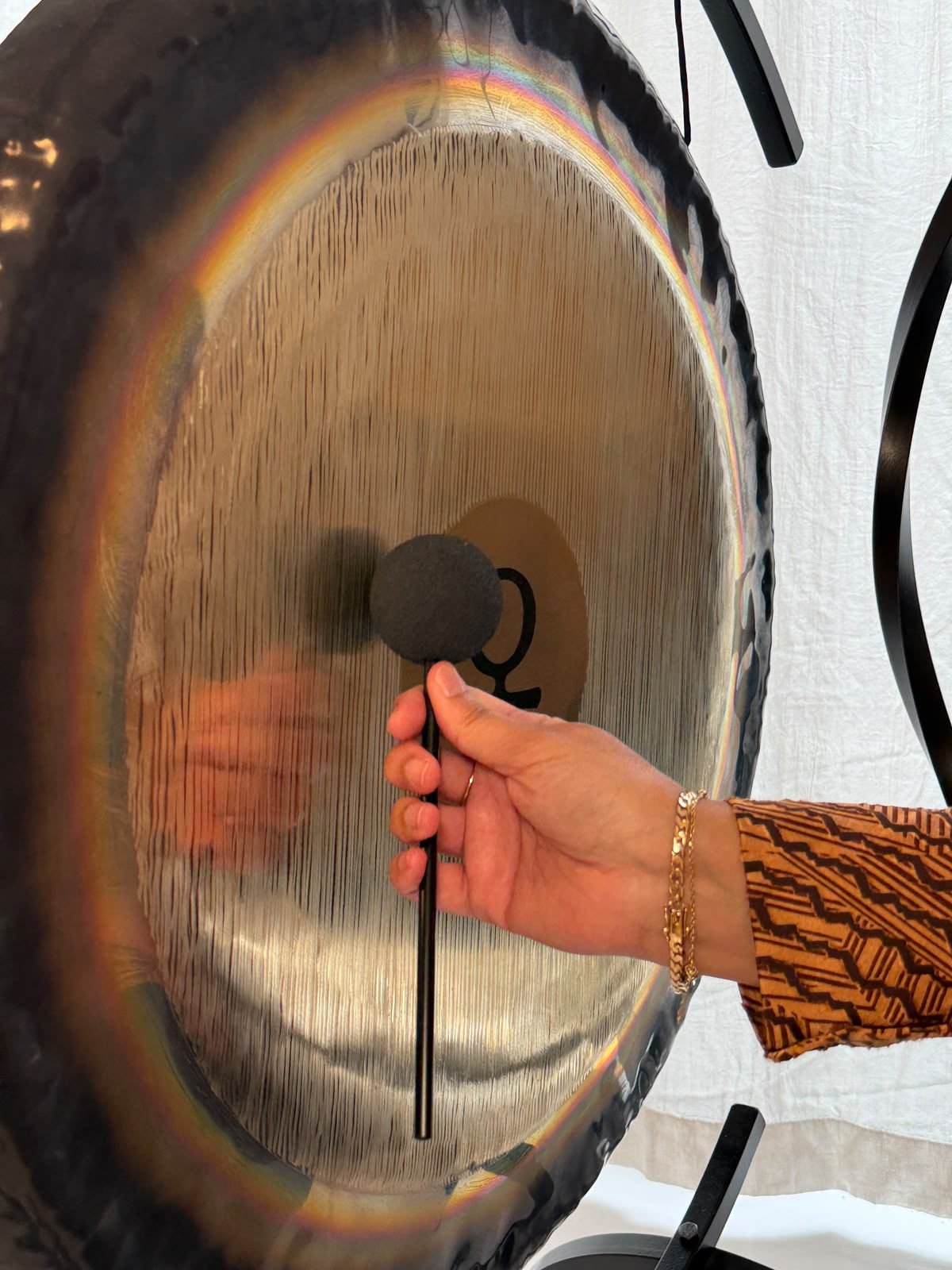
A gong can fill an entire room with sound. One strike develops into layers of tone, vibration and resonance that continue to change long after the instrument has been played.

During a gong bath, you lie down comfortably while these waves of sound move through the space around you. There is nothing to follow and very little to do. You listen, feel and allow your attention to settle.

At Energy Benders in Amsterdam, gong sessions are part of our wider sound healing practice: immersive experiences created around extraordinary instruments, conscious listening and deep rest.

This guide explores what happens during a gong bath, why the gong creates such a unique experience and what to expect when you join a session.

What is a gong bath?

A gong bath is a form of sound bath in which the gong takes centre stage.

Despite the word bath, there is no water involved. You are “bathed” in layers of sound and vibration created by the gong. A practitioner gradually plays different areas of the instrument using a variety of mallets and techniques.

Unlike singing bowls, which produce relatively defined tones, a large gong produces an extraordinary spectrum of frequencies and overtones. Strike it gently and you may hear a low resonant hum. Build the intensity and that sound can develop into a powerful wave that seems to fill every part of the room.

The result is highly immersive. Rather than listening to a melody, you immerse yourself in a constantly changing field of sound.

What happens during a gong bath?

A gong bath session usually begins quietly.

After arrival, each participant finds a place on a mat and gets comfortable. A cushion and blanket can help you relax completely, as you will spend most of the session lying down.

The session may begin with a short breathing practice, meditation or guided meditation to help bring attention inward. Then the gong begins.

At first, the sound may be gentle and spacious. Gradually, the practitioner introduces different tones, rhythms and intensities. The vibration builds, recedes and builds again. At certain moments the gong may become profound and powerful; at others, you may hear little more than a single tone disappearing into silence.

Other instruments can sometimes enter the soundscape too: a chime, crystal singing bowls or other resonant instruments. In a crystal alchemy or mixed sound bath, these different sounds may blend with the gong to create additional layers.

Towards the end, the intensity usually decreases. Silence returns. There is time to ground before slowly sitting up and returning to the room.

Why does a gong bath feel different from other sound baths?

The gong is unpredictable in a way that makes it particularly interesting for meditation.

Its sound is extremely complex. One moment you may hear a deep drone; the next, higher tones seem to emerge from somewhere inside it. These sounds overlap so continuously that the mind can find it difficult to anticipate what comes next.

That can make a gong bath remarkably absorbing.

Instead of consciously trying to concentrate, your attention can become immersed in the sound itself. Thoughts may become less prominent as the next wave of vibration takes your attention somewhere else.

Some people experience a sense of timelessness. Others notice physical tension, moments of clarity or simply how good it feels to stop responding to external input for an hour.

Every session, and every experience of it, is different.

What does a gong bath do to the nervous system?

One of the reasons people seek out sound healing is to create intentional space for relaxation.

During everyday life, the nervous system continuously responds to information: conversations, screens, work, decisions, movement and stimulation. A gong session changes the environment completely. You lie down, close your eyes and give your attention to one sensory experience.

Sound, slow breathing and physical rest can create conditions in which the body begins to unwind. For many people, this makes gong meditation useful as part of their approach to nervous system regulation.

You may notice your breath becoming slower, muscles beginning to relax or a feeling of calm emerging as the session progresses.

Sometimes the most interesting part is simply noticing the contrast between how you arrived and how you feel when you leave.

Is a gong bath a form of sound healing?

Yes. Gong meditation is commonly practised within the broader field of sound healing and sound therapy.

A sound healing practice can include gongs, crystal bowls, Tibetan bowls, voice, tuning forks and other instruments. Different traditions also combine healing and sound with yoga, breathwork, chakra practices, Reiki or other forms of energy healing.

At Energy Benders, the emphasis is on the direct experience of sound. You don’t need to analyse every frequency or interpret every energetic sensation. Listen to what happens. Notice your response.

That process can sometimes offer its own insight.

What are the benefits of a gong bath?

People come to a gong bath for many different reasons: relaxation, meditation, stress relief, greater awareness or simply curiosity about the instrument.

A gong bath can create space to:

  • unwind after periods of stimulation or activity;
  • let go of accumulated tension;
  • experience a deeper meditative state;
  • bring conscious attention back to the body;
  • reset after a busy week;
  • explore sound, resonance and vibration;
  • create a moment of restoration and balance.

Some people describe feeling peaceful afterwards. Others feel energised, clear or unusually quiet.

Within energetic traditions, experiences may also be interpreted through concepts such as a blockage, chakra balance, Reiki or Reiki healing. These perspectives are personal: the sound itself can be experienced freely, without needing a particular interpretation.

Gong bath, crystal sound bath or singing bowls?

Each creates a distinctly different experience. A gong is expansive. Its sound can move from barely audible to enormously powerful, creating complex layers of resonance.

Crystal bowls tend to produce clearer, sustained tones. A crystal sound bath can therefore feel more spacious and luminous, while a gong bath often has a stronger sense of movement and intensity.

Other group sound experiences may combine several instruments. Some practitioners work with alchemy bowls, voice, breathwork or restorative yoga; others collaborate as a duo to create a richer soundscape.

There is no single correct technique. The instrument, venue, practitioner and intention all influence the session.

Is a gong bath suitable for beginners?

Absolutely. You do not need experience with meditation, yoga, sound healing or any other wellness practice to attend. In fact, people who find traditional meditation difficult can sometimes find sound particularly accessible. Instead of trying to create mental silence, there is something tangible to listen to. The only real guidance is to get comfortable, listen and notice.

Some moments may feel serene. Others may be intense. Your intuition may draw your attention towards particular sounds or sensations. Allow the experience to unfold rather than deciding beforehand what should happen. Sometimes surrender is part of the practice.

What do I wear to a gong bath?

Wear comfortable clothing that allows you to lie down easily for the full session. Warm layers are useful. During periods of deep relaxation, you may become cooler even when the healing space itself is warm. Depending on the venue, mats, cushions and a blanket may already be provided.

You don’t need special yoga clothing. Choose something in which you can rest comfortably and move freely. Arriving a little early also gives you time to settle before the session begins.

How often can I attend a gong bath?

There is no fixed schedule. Some people attend a gong workshop or session occasionally when they feel the need to slow down. Others make group sound, meditation or restorative practices a regular part of their routine.

Regular practice can also make the experience more interesting. You begin to recognise differences: how easily do you settle today? Where are you holding tension? Does the same sound affect you differently from one session to another? The point is not to reproduce a particular feeling. It is to pay attention to what is there.

Where can I find gong bath or sound healing sessions in Amsterdam?

Energy Benders is an Inner Peace Studio in Amsterdam East, Netherlands, dedicated to sound, breath and restorative practices. Our programme includes Gong Baths, Crystal Sound Baths, Nervous System Reset, breathwork, meditation and other experiences designed to create time for what is happening within.

If you are searching for a sound bath in Amsterdam, you can check our agenda for upcoming sessions, special events and workshops. We are located in Amsterdam East; people searching specifically for sessions in Amsterdam Noord can reach the studio from the other side of the city as well. Whether you come for the gong, crystal bowls or another practice, each session is an invitation to step out of the pace of the day for a while.